1. Introduction to basic concepts
You can use a reserve call option strategy when you think the price of the stock you hold will rise slightly or fluctuate moderately for some time to come.
Short a put option while having enough cash in the account to be ready to buy the underlying stock at any time is a trading strategy for this type of option called a cash-guaranteed put (Cash-Guaranteed Put).
Options, like stocks, are financial securities that can be traded. The essence of an option is a contract. The person who buys the contract pays the premium (option premium) and enjoys the right; the person who sells the contract receives the premium and assumes the obligation.
The buyer's right is to choose to buy or sell a certain amount of an asset (the underlying asset) at an agreed price (exercise price) within a specified period of time. The seller's obligation is to sell or buy the asset in accordance with the contract when the buyer proposes to exercise this right.
If the contract gives the buyer the right to "buy" an asset, it's called a call option (call); if the contract gives the buyer the right to "sell" the asset, it's called a put (put).
Selling a put option means that you are the seller of the option. While receiving the option premium, you also assume the obligation to buy stocks from the buyer at an exercise price at any time within a specified period of time.
Furthermore, you can also buy back this contract from the market at any time until your rights are exercised, so you no longer have to assume this obligation.
It is important to note that investors who use a cash-guaranteed put option strategy are often willing to have their options executed and buy the target stock. In this way, they can not only buy stocks at the price they mentally expect, but also earn premium income from selling put options.
2. Introduction to trading characteristics
Get option premium income
If you sell options, you can get corresponding option premium income.
There is no risk of a strong risk.
Since there is enough cash, using cash-guaranteed put options usually does not require investors to keep an eye on the market at all times, and there is no risk of being forced to close positions.
3. Risk and Return
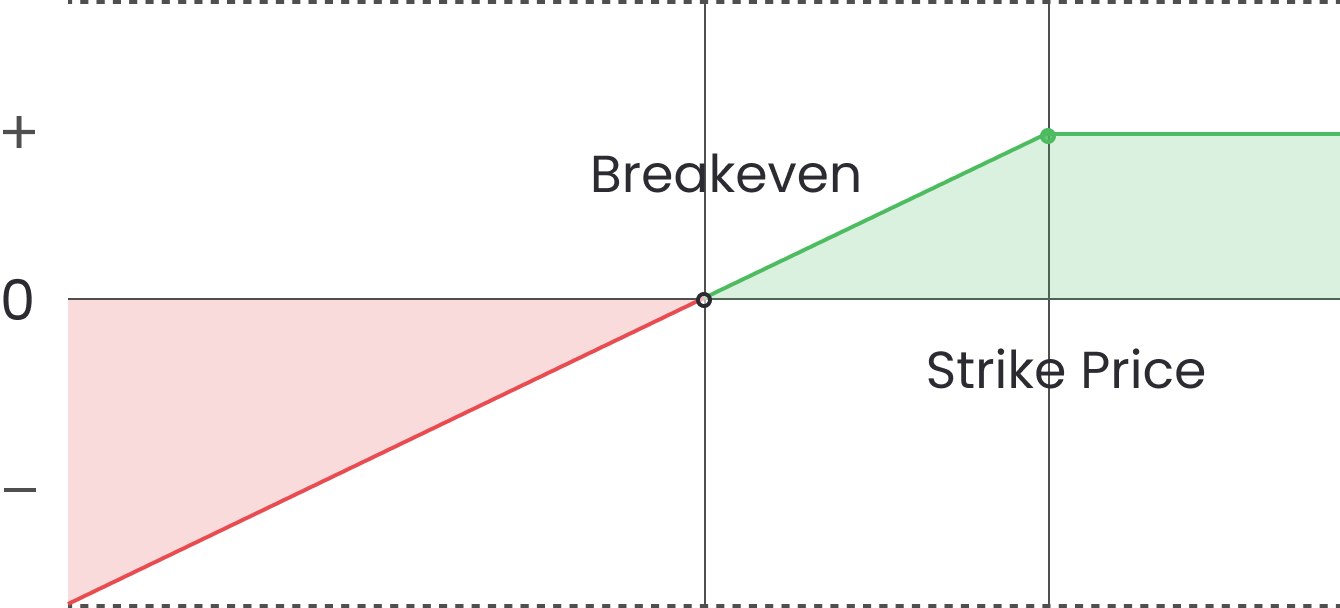
P/L:
Max Profit: Stock Price (Open) - Strike Price + Purchase Cost
Max Loss: Unlimited
Breakeven: Stock Price (Open) + Strike Price
P/L Calculation Formula:
Stock Price >= Purchase Cost: Stock Price (Open) - Stock Price (Expire) + Purchase Cost
Stock Price < Purchase Cost: Stock Price (Open) - Strike Price + Purchase Cost
How To Make Profit?
Stock Price < Breakeven Price
4. P/L Chart